SKF SA extends engineering excellence and lifecycle services across Africa, enhancing customer efficiency and ESG Impact
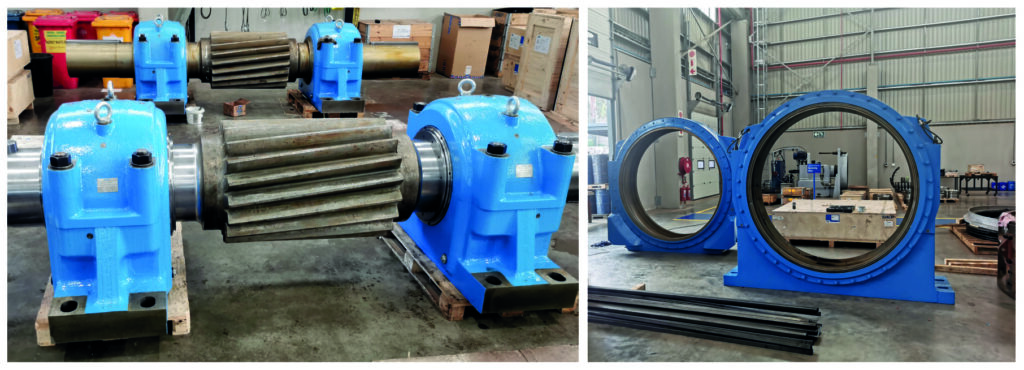
SKF South Africa’s Application Engineering Services cover a wide suite of solutions including installation, lubrication systems, condition monitoring and bearing remanufacturing. At the core of the company’s Application Engineering strategy is a commitment to move beyond the development and installation of housings, bearings and sealing systems by integrating reliability services into engineered solutions that extend the life of SKF bearings to enhance the overall performance and efficiency of customers’ rotational assets.
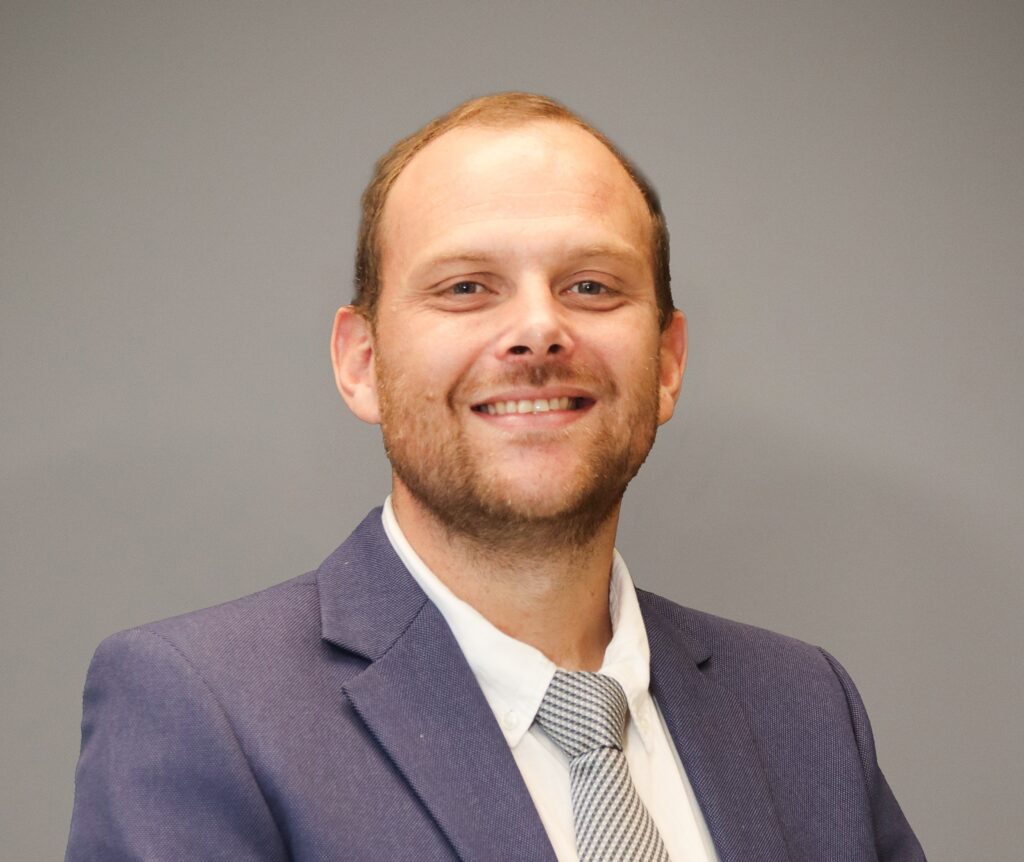
SKF’s Engineering Department was initially divided into Applications Engineering and Project Engineering with the former typically handling technical issues, assisting customers with designs and technical inquiries and conducting failure analyses, etc. Project Engineering on the other hand, was responsible for delivering customised solutions locally – a service unique to South Africa and therefore not widely recognised within the global SKF Group. “To strengthen our impact, we integrated the Project Engineering and Application Engineering teams into a single dynamic Applications Engineering Division while retaining all the core services our customers have long trusted,” explains Janus Bezuidenhout, Application Engineering Manager at SKF South Africa. A seasoned mechanical engineer with deep engineering experience, Bezuidenhout holds a Mechanical Engineering degree from the University of Pretoria with a specialisation in maintenance and reliability. He joined SKF in 2013 as Project Engineer, recognising the company as a strong match for his skills and interests.
SKF South Africa made a strategic decision to extend its skilled engineering support beyond South and Southern Africa, delivering Application Engineering expertise across the continent, a region that represents a true growth powerhouse for the company. To harness this potential, SKF launched its One Africa 2030 strategy, positioning itself as the leading partner for intelligent and clean rotation across industries. In addition to strengthening direct customer relationships across Africa, our objectives are to support OEMs operating in South Africa who have installations across Africa. SKF South Africa‑manufactured products already support operations in numerous mines. To build on this footprint, SKF is committed to developing direct relationships with customers, whether through distributors or via its expanding Africa‑wide Applications Engineering network.
To strengthen this presence, SKF application engineers have been appointed to support the Northwest Africa and Central East African regions, while seven engineers based at the South African office in Gauteng and the Western Cape are available to deliver support and promote SKF’s customised solutions offering.
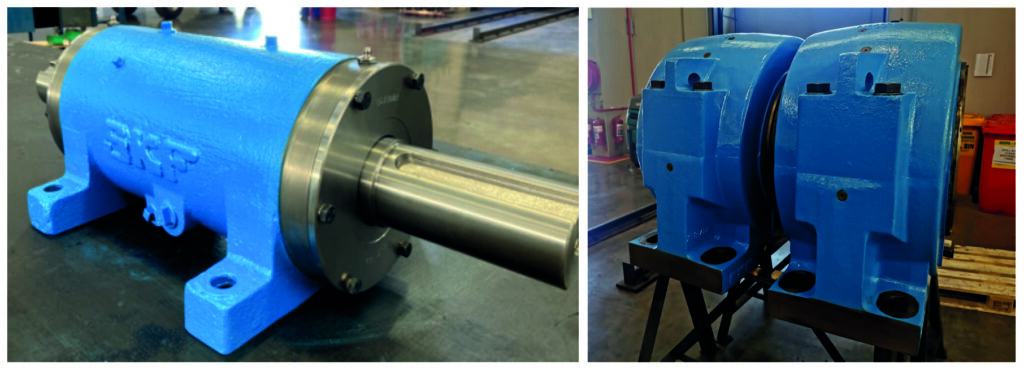
With the absence of a manufacturing facility in South Africa, SKF collaborates with long‑standing authorised local suppliers including foundries and machine shops that have partnered with SKF SA for over 40 years, all audited and approved to manufacture in strict compliance with SKF Group policies and global quality standards. Products manufactured locally are thus equal in quality to any SKF product from Europe and Bezuidenhout notes that in some cases, the designs are even more robust due to customisation to withstand harsh site conditions and deliver niche solutions for specialised requirements. In Southern Africa, replacement bearing solutions are often required for ageing plant equipment still operating on designs dating back to the 1940s. When customers cannot find what they need in a catalogue, SKF South Africa steps in by manufacturing housings, seals and other non‑standard elements, locally assembling bearings to meet exact requirements.
Elaborating on SKF’s lifecycle services strategy for supporting Africa, Bezuidenhout says it begins with engineered, locally manufactured customisations and extends to a comprehensive suite of lifecycle management and life‑extension services that deliver long‑term value, reliability and sustainability.
Starting with lubrication as a good example, he underscores that without correct lubrication systems and schedules, premature failure will occur even with correct bearing or housing installations. “Both over- and under-lubrication can lead to costly breakdowns and production stoppages. Manual lubrication, with the inherent risk of human error, can compromise the delivery of the correct lubricant, quantity and timing, while also posing safety hazards for personnel. Moreover, in certain applications the bearings cannot be accessed while the system is in operation, requiring machinery to be shut down and production halted for lubrication. By comparison, our automatic lubrication solutions improve reliability and extend component life through accurate delivery of the right amount of lubrication at the right time to the correct points.”
Another driver of unplanned downtime is poor installation practices, which can lead to machine and equipment failure through misalignment, contamination or even component damage. Bezuidenhout further points out that even with proper lubrication, accumulated wear or seal damage can initiate failures. SKF South Africa’s highly skilled technicians are trained to install bearings and assemblies according to well-established SKF procedures and methods. He further suggests that the most effective way to prevent failures is by implementing SKF’s vibration analysis, condition monitoring and lubrication analysis, proven technologies and best practices that detect the onset of problems well in advance.
“The vital role of condition monitoring cannot be overstated,” states Bezuidenhout, noting that real‑time data allows just‑in‑time maintenance shutdowns or targeted investigations, delivering several benefits: Extending equipment lifecycles, boosting uptime, preventing catastrophic failures that could trigger unscheduled plant stoppages and limiting damage so that bearings approaching primary failure can be remanufactured.
SKF South Africa embodies the principle of circularity at its specialist Bearing Remanufacturing Centre at the Johannesburg HQ, where proven capabilities give high‑value bearings and housings a second, third and even fourth life. Circularity is a sustainability approach that replaces the traditional ‘take‑make‑waste’ model with regenerative cycles, extending product, material and resource lifecycles. With an emphasis on reuse, repair, remanufacture and recycle, waste is minimised, resources are conserved and emissions are reduced.
This focus on remanufacturing rather than replacing is a key pillar of SKF’s ESG (Environmental, Social and Governance) commitment, driving environmental responsibility through reduced CO₂ emissions, delivering social value by lowering customer costs, reducing lead times, improving uptime and reinforcing governance through strict adherence to global quality standards. The manufacture of new large size bearings that would otherwise take eight to ten weeks to ship from Europe can be remanufactured locally in less than two weeks. Even medium‑sized housings that might take up to eight weeks to produce from scratch can be restored in two to three weeks to original design requirements. “In this way, SKF extends product life and efficiency for customers while demonstrating how circularity and ESG principles converge to drive operational and environmental sustainability, resource efficiency and long‑term growth across Africa,” asserts Bezuidenhout.
Building on its past engineering successes, SKF South Africa is replicating proven solutions across the African continent. A good example is SKF custom‑engineered robust mill pinion housing assemblies with upgraded seal systems for horizontal grinding mills, designed to withstand harsh environments, ensuring reliability in critical mine operations. “When paired with our condition monitoring systems, these bearings can be remotely tracked from South Africa, enabling proactive inspections the moment early signs of wear are detected,” explains Bezuidenhout. “By showcasing how these customised solutions deliver long‑lasting performance in Southern African plants, SKF highlights the value of extending asset life and improving reliability – a strategic model that we are deliberately rolling out more broadly across Africa’s mining sector.”